Back to Blog Page
Manager Confidence & Conversations

Disabled person vs. person with… The debate continues

Esi Hardy
Esi Hardy | | 2 min read
sticks and stones
Esi Hardy

Esi Hardy

Esi Hardy is a disability activist, host of The Equality Edit podcast, and Founder and Managing Director of Celebrating Disability. With a background in disability equality, Esi set up Celebrating Disability in 2017 to help organisations attract, engage and retain disabled people through training, consultancy and speaking. Celebrating Disability works with EDI specialists to turn disability inclusion policy into practice. Named Disability Inclusion Business of the Year 2026 by Corporate Vision, the company's recent clients include Henkel, Shoosmiths, the Financial Conduct Authority, Age UK, Homes for Students and Wales Millennium Centre. In her spare time, Esi loves true crime and rock music.

The Context

Over the last few months and throughout my career, there have been many conversations about whether the term “disabled people” should be utilised over the term “people with disabilities”.

Whilst this is a personal choice, most people don’t fully appreciate the differentiation between the two. They therefore believe that it is just a turn of phrase and supports the construction of a sentence.  So, I’ve decided to write an article to put some context to each term.

The social vs medical model of disability

The social model of disability states that disabled people are only disabled because society constructs barriers to prevent complete inclusion. For example;

  • The lack of step free access could prevent a physically disabled person entering a building

  • The lack of access on public transport,​

  • Disproportionate amounts of accessible accommodation for disabled people

  • The lack of fully thought out integration in education meaning disabled people are disempowered at an early age 

So the social model states that in order to compensate for that society needs to change in order for the world to be more equal for disabled people.  The medical model, in direct comparison states; that it is the problem of the disabled individual alone. The impairment is a “problem” that needs to be solved.

However, without the medical model there cannot be a social model: in order for us to recognise that there is a problem surrounding equality and inclusion, we must recognise the impairment.

Back to the debate

Do we use the term disabled person, or do we stick to a more traditional, perhaps outdated term; person with a disability? For those people who still might think that it is just a phrase in a context, try this:

Thinking back to the social model: We said that the social model of disability believes that it is society that stops disabled people from fully participating. If we use the term disabled person in the same light we are recognising through language that the only disability are the barriers constructed within society. “Person with disability” suggests nothing needs to change.

As usual, share your thoughts by getting in touch. Talk to us about how your business can engage disabled people through language.

Making your forms inclusive - Title was a picture of a form
Inclusive Recruitment & Employment Manager Confidence & Conversations Reasonable Adjustments & Workplace Support Welcoming Disabled Customers

Asking About Access Needs on a Form

Key takeaways Your form collects access needs. Your managers turn them into adjustments that work.Reasonable Adjustments in Practice is a...
By Esi Hardy | 6 October 2026 | 10 min read
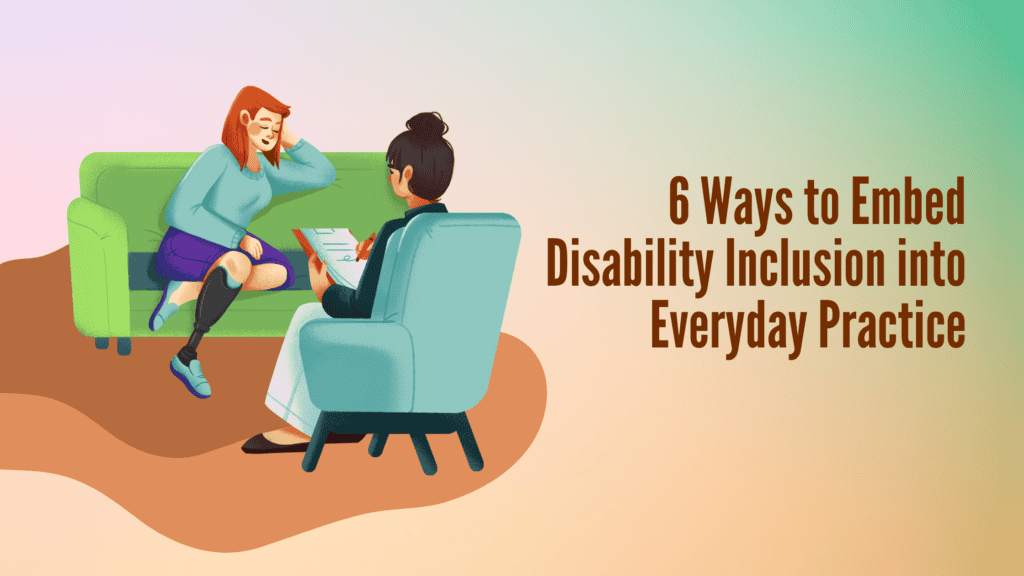
Illustration of a disabled person with a below-knee prosthetic leg sitting on a sofa during a one-to-one meeting with another person taking notes. The image accompanies an article about embedding disability inclusion into everyday workplace practice following training.
Disability Inclusion Strategy Disability Inclusion Training & Learning

6 Ways to Embed Disability Inclusion into Everyday Practice

1. Measure progress over attendance One of the biggest mistakes I see organisations make is measuring success by attendance. Attendance...
By Esi Hardy | 3 July 2026 | 6 min read
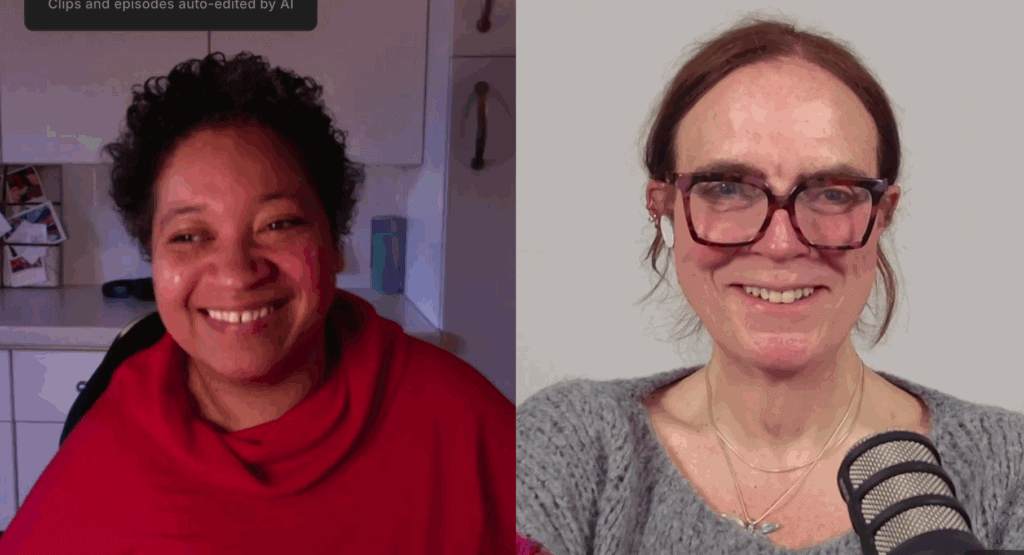
Two people on a split-screen video call, **Esi Hardy** on the left and **Joanne Lockwood** on the right, both smiling and looking at the camera. Esi is wearing a red top in a kitchen setting. Joanne is wearing glasses and a grey top, speaking into a microphone against a plain background.
Disability Inclusion Strategy Disability Inclusion Training & Learning Inclusive Recruitment & Employment

Lived Experience Alone Does Not Create Inclusion in the Workplace

In my recent conversation with Joanne Lockwood on The Equality Edit, this came through clearly. We spoke about the value...
By Esi Hardy | 25 March 2026 | 7 min read

Ready to turn disability inclusion policy into practice?

Practical disability inclusion support focused on manager confidence, workplace conversations and consistent implementation.

Explore training and support